Acrylics
Acrylics are a relatively modern medium, and are a beautiful, richly-pigmented and versatile form of paint.
They were developed in the 1930’s for the painting of vehicles, as they're fast-drying, weatherproof and adhere to almost any surface. Artists started to use them as a medium in the 1940's, but traditionalists struggled to warm to them as they were used to using the slower-drying and more blendable medium of oil paint. They really came into their own in the 1960's when pop artists such as Andy Warhol starting using them for their bright colours and versatility. Today, they are one of the most widely used painting mediums in the world, and we love them!
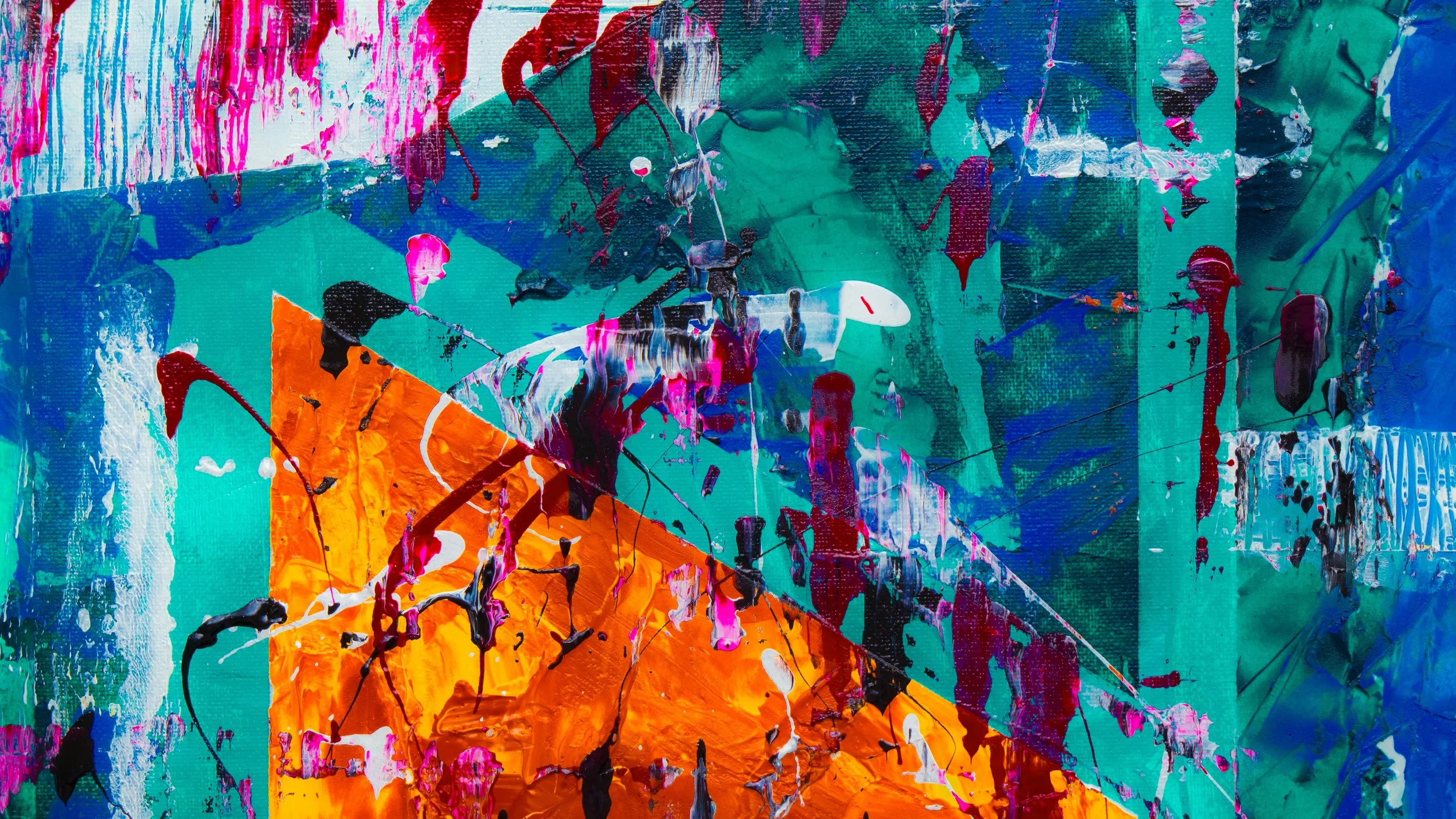
Like all paints, acrylics are made from pigments held together with a binder. In the case of acrylic paint, the binder is a water-soluble resin that dries to a transparent, insoluble plastic. The transparent resin allows the true colour of the pigment to shine through, making them beautifully bright. They range from fairly opaque to semi-transparent, so can be applied as washes of overlapping layers, or made more opaque by applying several coats, either with a brush or a palette knife. They’re also great for airbrushing, pouring and printing.
Equipment
First - mess limitation! Always protect your table, floor and clothing from splashes and spills, as acrylics are very difficult to remove once dry, especially from fabrics and porous surfaces. Use a palette knife or lolly stick to mix your paints, either on a disposable palette, in a plastic tub, or on something non-porous like an old dinner plate. And have a jug of water and a cloth nearby before you start.
Surfaces
You can paint on almost any surface with acrylics, but some will require preparation before you start. Most acrylic papers and canvases are ready-primed, so you can get going straight away. If you’re going to paint on a shiny surface, you’ll need to use a primer such as gesso to help the paint adhere. And if you’re going to paint on a porous surface, you will need to seal the surface first with gesso to prevent the paint soaking in.
Paints & brushes
There are lots of brands of acrylic paint available, with slightly different formulas. Try out a few and choose the one that works best for the style and techniques you’re using. Heavy body acrylics are great for impasto work. The ones we use in class have a glossy finish to save you varnishing your work. Soft body paints are great for those who like a thinner consistency for more detailed work. And fluid acrylics are required for pouring techniques. Hogs hair brushes are robust, so they work well with acrylic paint, while a synthetic brush will give a smoother finish. Whatever you choose, wash it well before the paint dries!
Acrylic Mediums
This is where the fun really starts! Acrylic paints can be thinned slightly with water but too much will cause the paint to separate. Instead it's best to use a medium to thin the paint. Mediums can also change the properties and finished appearance of the paint. For example, to add more texture you could use sand medium, modelling paste (white) or gel medium (clear). To increase the fluidity or blendability you can mix in a retarder or a gloss medium. To change its appearance, you could add iridescent medium or prepare your surface with crackle paste first.