
Pastels
Pastels are versatile, vibrant and convenient to use. Choose between oil or chalk pastels for two quite different artistic effects.
What Are Pastels?
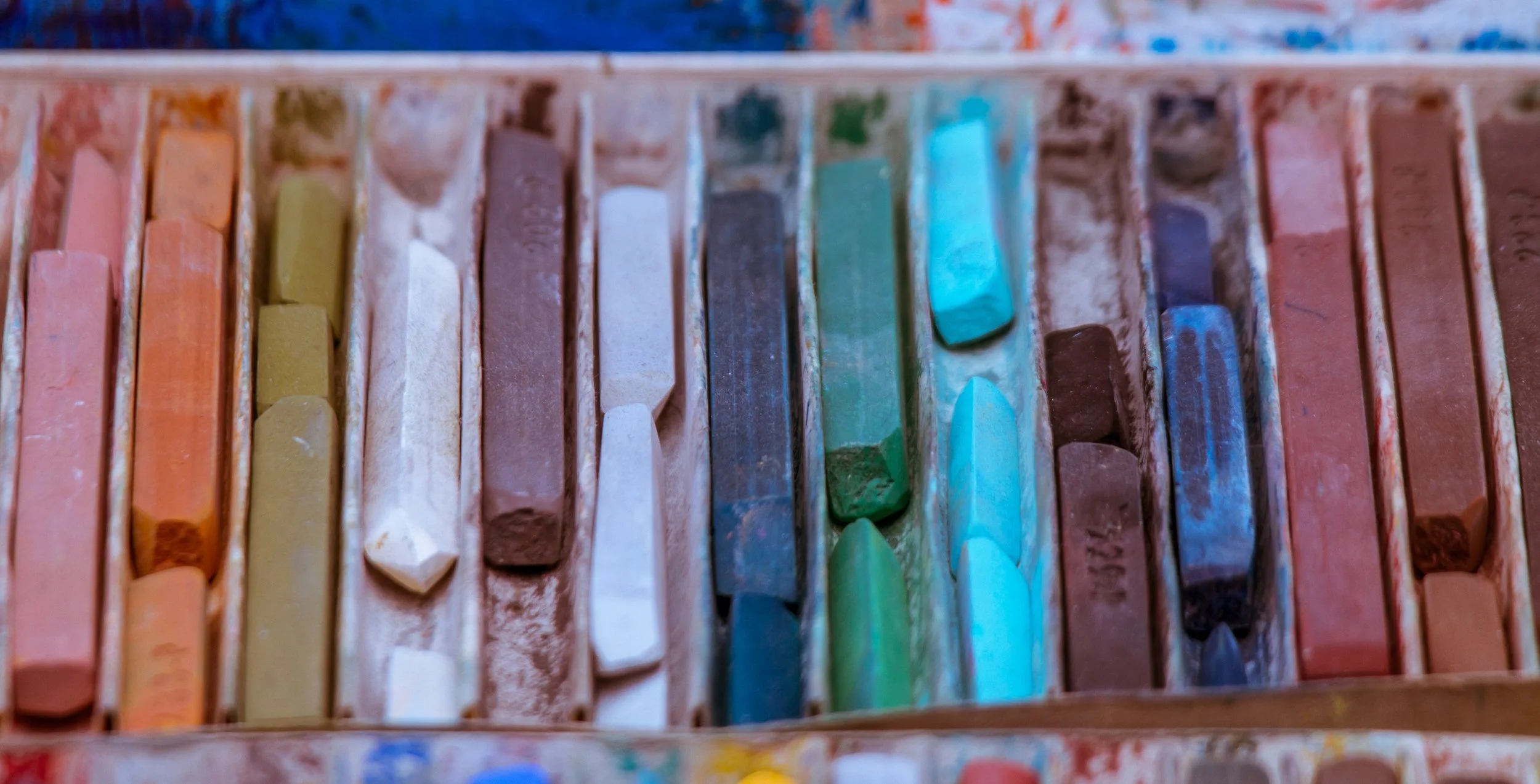
Pastels are the closest medium to pure pigment you can find; they are convenient to use, beautifully vibrant and can really make your paintings zing with colour!
All pastels are basically pigment held together with a binder. The binder in oil pastels is wax and linseed oil; the binder in chalk - or ‘soft’ - pastels is gum with a chalk filler. They come in stick form so you can apply the colour directly to the paper.
With both types of pastel, it’s worth spending a few extra pounds to buy a good quality set. Cheaper oil pastels tend to be more like wax crayons – they are difficult to layer up and blend, and cheap soft pastels don't contain as much pure pigment so your results will be less vibrant and the pastels can feel scratchy as you use them.
Finished Surface Texture
Because oil pastels contain oil, the finished effect is painterly (thick, oily and slightly glossy once several layers have been applied and blended). Soft pastels contain chalk so you get a matt, powdery finish.
Fixing the Painting
The surface of an oil pastel painting is sticky and doesn’t fully dry out, so take care to cover your finished picture with a protective sheet such as tracing or greaseproof paper.
A soft pastel painting can be sealed with fixative spray (or hairspray) to prevent smudging. However, even with a fixative, you should store your work under protective paper.
Painting with Pastels
Although soft and oil pastels are very different in their characteristics, the techniques used to apply them are fairly similar.
Lay out your composition, with a colour similar to your paper or similar to the objects or scene you’re depicting. Then carefully plan where the medium, dark and light tones go and work from light to dark as it's difficult to apply white or light colours over dark colours. Only add the darkest tones at the very end and try to avoid using black as it tends to dominate a picture.
Be careful not to muddy your colours by blending too many together. We’ll cover Colour Theory in a separate Fact Sheet, but just remember that all 3 primary colours make brown, and opposites on the colour wheel make grey.
With oil pastels, the colour tends to stay put once it’s on the page, whereas chalk pastels are dusty and smudge easily. With both types of pastel, work from top to bottom or left to right (if you’re right handed, right to left if you’re left handed) to prevent your arm smudging what you’ve done; alternatively, use a piece of scrap paper to cover the part of the painting you aren't working on.
Adding Finer Details
As both types of pastel are chunky compared to a pencil, the finished effect from both tends to be impressionistic. But there are certain techniques that can help you add finer details towards the end.
With oil pastels you can use "sgraffito" - this is where you scratch into the pastels with a cocktail stick to reveal the layer below. With chalk pastels you may decide to invest in some soft pastels in pencil form which allows you to add much finer details.
Stippling (fine dots) and stencilling also allow you to add sharper lines and finer details to your work.
Whichever pastels you use, it will take longer to create a finished piece than it does paint, so be patient and enjoy the exciting process of slowly bringing something to life...
DON'T CONFUSE OIL PASTELS WITH OIL STICKS WHICH HAVE A MUCH HIGHER OIL CONTENT AND WORK LIKE OIL PAINTS